
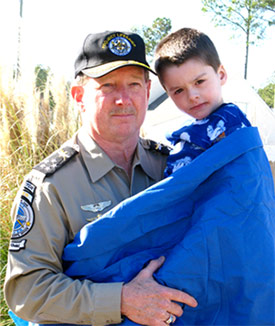
 Project Lifesaver is a 501 (C)(3) community-based, public-safety nonprofit organization that provides law enforcement, fire/rescue, search-and-rescue (SAR) teams, caregivers and others with a program designed to protect and, when necessary, quickly locate individuals with cognitive disorders who are prone to the life-threatening behavior of wandering. The organization was founded in 1999 in Chesapeake, Virginia. The necessity of this program was determined through the correlation between cognitive conditions and the acts of wandering and “eloping.” With the dramatic increase in cognitive conditions since the inception of the organization, Project Lifesaver has grown from a localized program to one recognized internationally as a proven and effective method of “bringing loved ones home.”
Project Lifesaver was the first to apply such locating techniques to aid in the search and rescue of individuals, and it is the most widely used and proven most-effective program in the nation that is specifically designed to protect “at-risk” populations in our communities in this way. The program was structured to strategically combine state-of-the-art locating technologies, innovative search-and-rescue methods, and community policing courses that educated first responders and search teams about search and rescue and everyday encounters involving people with cognitive conditions.
In short: Standard/traditional SAR efforts applied to these special-needs events typically involve hours, days, weeks or longer, as well as tremendous investments of manpower, funds and more — and too often they are unsuccessful. Conversely, Project Lifesaver searches typically involve only one to three (1 – 3) trained, certified and equipped electronic search specialists (ESS) and less than 30 minutes, saving precious time, resources and, most importantly, lives.
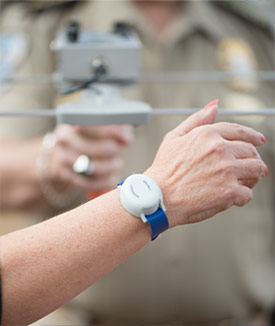 The Project Lifesaver Program is run at a municipality level by public safety agencies. When an agency decides to implement the program, Project Lifesaver International will equip them with the necessary technologies and provide training to those involved. The training includes the use of the equipment, the implementation of the strategic methods specifically designed for the program, and also community policing courses that provide a basic understanding of cognitive conditions to better comprehend the behaviors of an individual with said condition. Also included during training is the use of the PLS Database, which is a useful resource provided to member agencies at no cost. Completion of training is required for certification. Once an agency has become certified, they may begin acquiring clients for their local program.